
Understanding High Fashion: A Complete Guide to Luxury Fashion
Aug
What Does High Fashion Really Mean?
- When you hear the words high fashion, your mind probably jumps to glossy magazine covers, Paris runways, and designers whose names feel more like art than retail.
- But high fashion, also known as haute couture, is more than beautiful clothes with big price tags. It is presence.
- It is the way a room reacts before you have spoken.
- It is the quiet shift in energy when someone notices how you move, not because of who you are, but because you look like you know exactly who you are.
- And in a world where first impressions are made in seconds, that is not something to underestimate.
The Language of High Fashion
Think of high fashion as a language you do not speak with words. You walk into a room, and without saying anything, you have already told a story. Not about wealth, but about intention.
In The Devil Wears Prada, there is that famous monologue where Miranda Priestly explains how an ordinary blue sweater trickled down from decisions made in a couture showroom years earlier.
It is a reminder that what you wear today exists because somewhere, a designer created something so specific it became impossible to ignore.
High fashion is the source code for style. It shapes the culture, filters down to the high street, and eventually lands in everyone’s wardrobe. Wearing it at the source is like reading the first edition of a book before the story is diluted in translation.
How is it different From Everyday Clothes?
Clothes can be beautiful without being high fashion, but high fashion changes you.
It is not just about expensive fabrics. It is about pieces that are
-
Designed for presence. The cut changes the way you stand, and the fabric changes the way you move.
-
Crafted with obsession. Every seam, every stitch, every lining has intention.
-
Built for conversation. The unusual pleat, the unexpected fastening, the detail you notice only when you are close enough to see it.
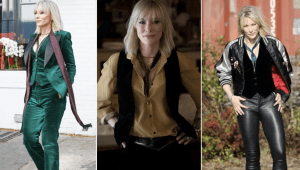
In Ocean’s 8, Cate Blanchett’s character Lou never wears anything particularly loud, yet every outfit is so sharply put together that you cannot look away.
That is the point. High fashion does not need to scream. It simply hooks your attention quietly and does not let go.
History Worth Knowing
High fashion’s roots stretch back to Paris in the mid-1800s, when Charles Frederick Worth began creating custom garments for clients who wanted exclusivity.
These were pieces that took hundreds of hours to make, often by hand, with craftsmanship so precise it bordered on obsessive.
Every hem, every panel, every bead told you it was not made for the masses. It was made for one person only. Which explains the urge and importance of being uniquely groomed!
Over the decades, high fashion evolved with culture. The 1920s gave us Chanel’s liberation from corsets. The 1940s and 50s brought Dior’s New Look, reshaping post war femininity.
The 1980s delivered bold, exaggerated power dressing. The 2000s blurred the lines between luxury and streetwear.
The forms have changed but the core principles of luxury, uniqueness, and craftsmanship have stayed the same.
Your skill, talent, and personality are what truly matter, but people do not see those first.
They see how you walk into a space. High fashion shifts your energy. Shoulders back, head high, movements deliberate.
It is like when Bella Hadid steps onto a red carpet or Amitabh Bachchan walks into the KBC room. Before they even say a word, they already have the whole room’s presence.
The grooming is part of the conversation her presence is having with the room.
It is not about being noticed for attention. It is about being registered. Being remembered. Making a mark.
High Fashion as a Conversation Starter

A regular jacket might keep you warm. A sharply cut blazer with an exaggerated shoulder changes the way people look at you.
In Crazy Rich Asians, there is a scene where Astrid, played by Gemma Chan, enters the wedding in a silver couture gown. You do not remember the dialogue. You remember the room stopping. That is the power of high fashion. It shifts the energy around you without you having to do anything.
Or everybody remembers the Black gown that Shanti Priya wore in Om Shanti Om, not the dialogue.
Sometimes people will approach you to ask about the piece. Sometimes they will not say a word, but you will notice the second glance. That glance is the unspoken acknowledgment. You are different.
Not About Labels, About Legacy
The most common mistake is thinking high fashion is about a brand logo. The logo is the least interesting thing about it.
High fashion is about choosing pieces that outlive trends, pieces you can wear years later and still feel current. It is about investing in something that makes you feel like the sharpest version of yourself every single time you wear it. High fashion exists outside the seasonal cycle. It is closer to art than commerce.

Why Switching to High Fashion Matters
Once you experience it, you stop dressing for the world and start dressing with yourself in mind.
You begin to see clothing as a tool. One that commands a room, makes people listen sooner, and sets you apart in spaces where blending in is easy.
In every industry, in every social setting, being remembered is a currency. High fashion is not the only way to earn it, but it is one of the most immediate, wordless, and effective.